With heavy Irish rain on the way, Fran and Conal had little time to explore the port town of Cobh, County Cork.
By Conal Healy
October 17, 2023: “You’d think with all the rain this country gets they would do something about the bloody drains”. Fran was annoyed. It was her turn behind the hire car and she was not enjoying it.
It was raining in Ireland. It was raining hard too. It was flooding. This was an Atlantic storm.
As the Irish say: “The weather has set in”. We had been lucky so far with the late autumn Irish weather. We might have sunshine in the morning and cloud in the afternoon. Or vice-versa.
“If you don’t like the weather in Ireland” I told Fran “You just have to wait two minutes … or two weeks”.
She was not impressed. At that moment a passing truck on the opposite side of the road hit a large puddle and a tsunami of water splashed across the front windscreen.
We were in Cobh, County Cork, and it wasn’t nice.
We had driven down from County Waterford the day before under darkening skies.
The Irish Met service warned that there was a storm coming, with lots of rain. Even by Irish standards there was serious stuff coming. We were told Storm Babet was Status Orange weather system and it was going to hang around for a few days.
Our plan had been to stay in Cobh for a few days, before heading for West Cork and onto Kerry. This would complete the last section of the Wild Atlantic Way that we had missed in 2019.
We had accommodation booked, we had scenic drives mapped out … after the Sunny South East of Ireland it was a chance to re-visited the wilderness we both loved.
Storm Babette had other plans.

We had landed in Dublin 10 days earlier, in that time we are crossed Ireland twice – Dublin to the Cliffs of Moher, Lahinch to Bray, then south to Waterford and now to Cobh.
The weather forecast gave us three hours to explore this historic town before the storm-force winds and rain arrived.
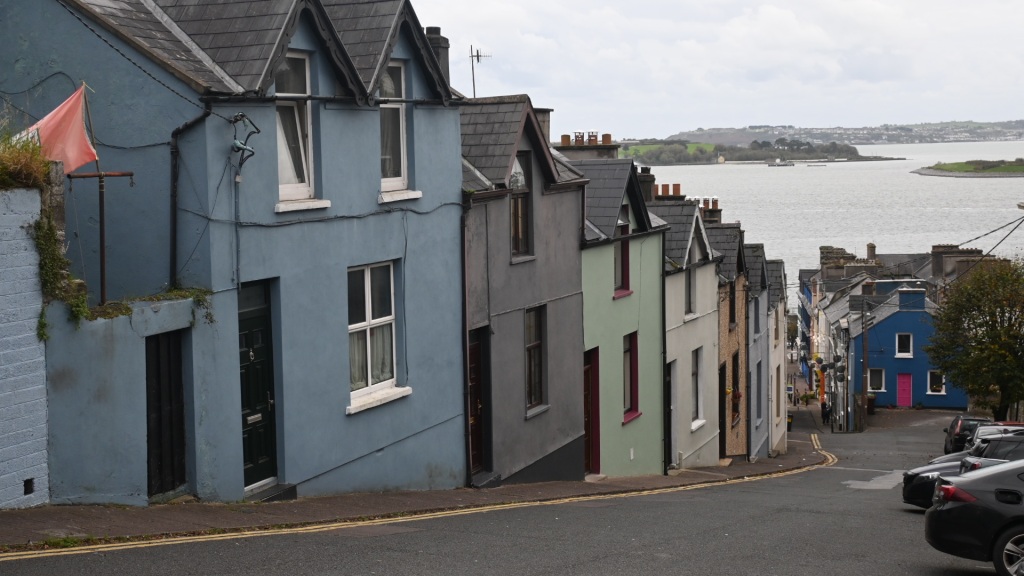
A characterful town with a unique place in Ireland’s heritage, Cobh has a rich maritime history as the embarkation port for the many people that emigrated from Ireland.
The distinctive town of Cobh (pronounced cove) is built onto the slope of Great Island in Cork Harbour just 15 miles from Cork City.
The towering St Colman’s Cathedral, French Gothic in style, stands at the top of the hill overlooking the tall brightly coloured buildings of Cobh and the dockside of the most important port of emigration in the country.
The port was called Queenstown, renamed following a visit from Queen Victoria in 1849, until it reverted back to its Irish name in 1922.
Cobh’s long maritime history includes the world’s first yacht club, the Royal Cork Yacht Club established in 1720, the first steamship to sail across the Atlantic, the Sirius, sailed from Cobh in 1838, Cobh was the last port of call for the Titanic on her tragic maiden voyage and Cobh was where survivors of the Lusitania were brought after the ship was torpedoed by German U-Boats off the Old Head of Kinsale in 1915. 150 victims of the Lusitania are buried in graves in the Old Church just north of Cobh.
Yet what Cobh is most associated with is the mass exodus from Ireland during the 19th Century. Once called “the saddest place in all of Ireland”, Cobh was the embarkation port of some 2.5 million Irish emigrants fleeing famine and poverty between the 1848 and 1950.
Their tale is told in the award winning exhibition centre, the Queenstown Story, housed in the disused Victorian Railway by the dockside.
The discoveringireland.com website says: “Though a town with a sorrowful past, Cobh is a vibrant hub of activity and interest. Cobh has a number of old-fashioned pubs and good quality restaurants.”

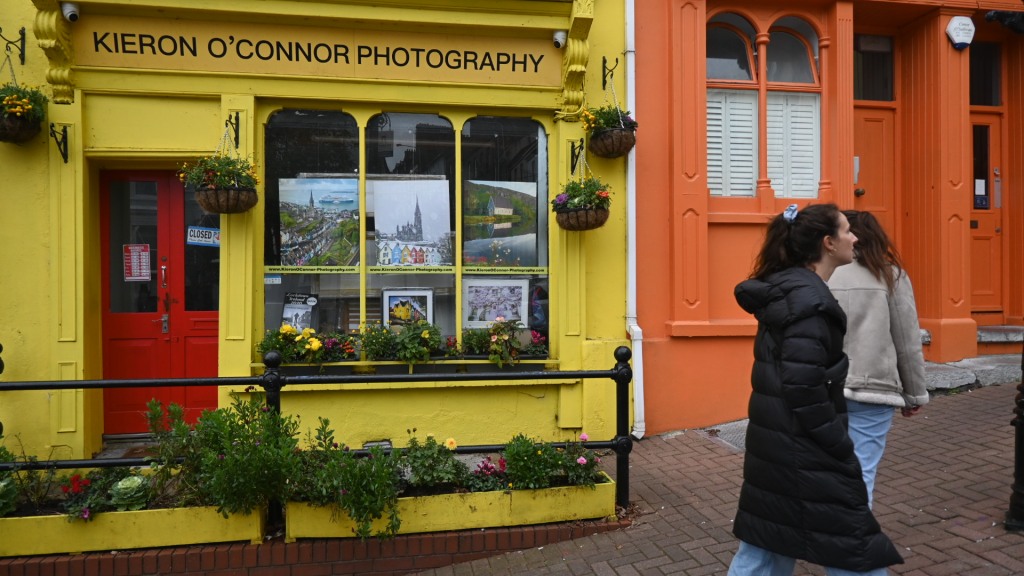

With time running out, and with heavy rain on the way, Fran and I wandered the narrow streets, winding up steep hills towards the domineering St Coleman’s Cathedral.
As we struggled up Kidney Steps, we met a priest making his way down. Taking pity on us, he asked: “Are you lost?” We told him we were making our way to the Cathedral. “Oh, that’s mine. I work there”. And gave us directions. Then went on his merry way.
Bemused Fran and I looked at ourselves: Had we just met a bishop? Did this wee man we had met on the step actually own the cathedral?
We struggled onwards.
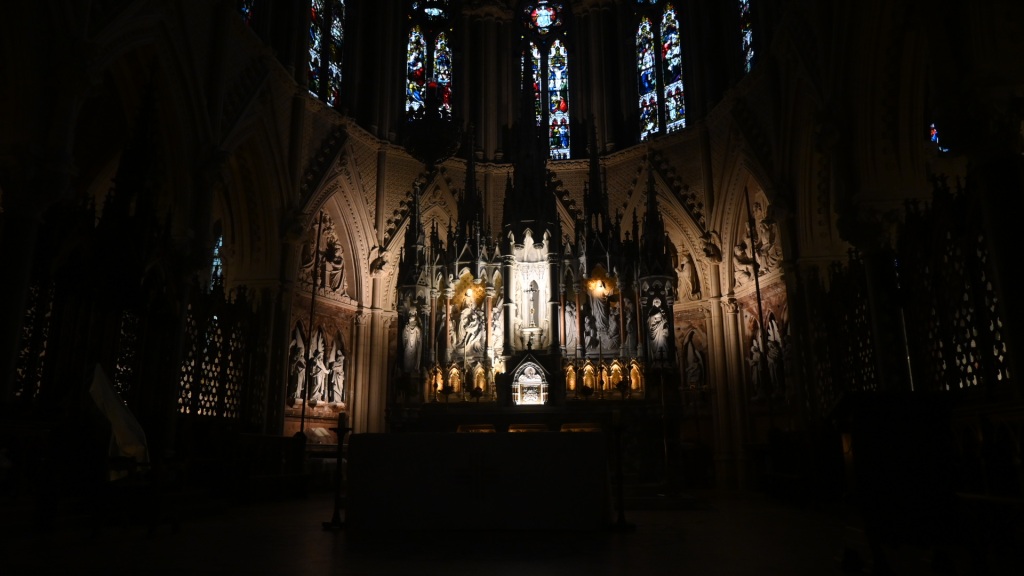
The Cathedral Church of St Colman (usually known as Cobh Cathedral, is a single-spire cathedral It is a Roman Catholic cathedral and was completed in 1919. Built on Cathedral Place, it dominates Cork harbour.
Construction began in 1868 and was not completed until over half a century later due to increases in costs and revisions of the original plans. With the steeple being 91.4 metres tall (300 ft), the cathedral is the tallest church in Ireland.
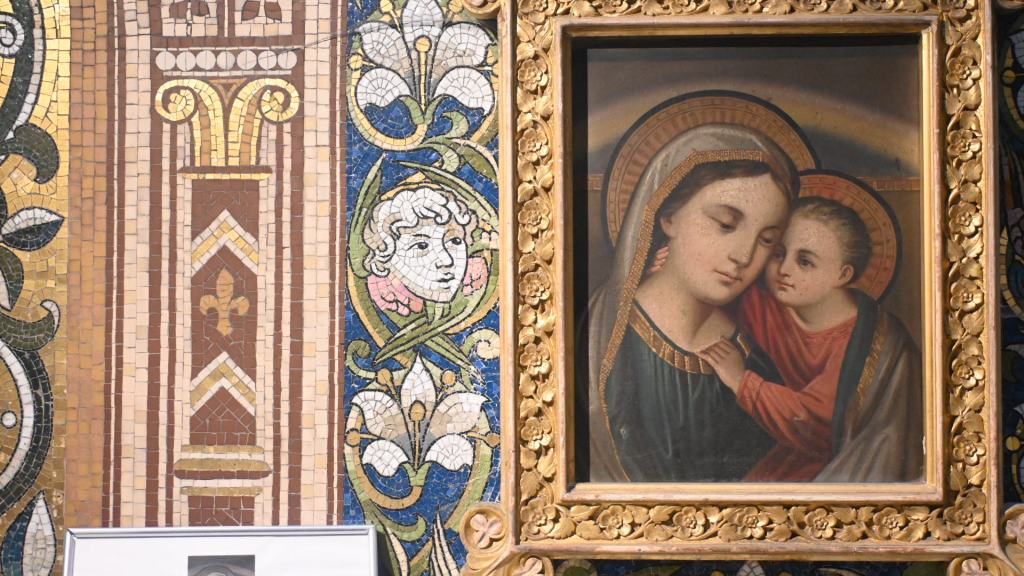
There is a particularly Irishness about the cathedral. For example, the aisle is a beautiful tile mosaic of Celtic knots and shamrocks. There is a certain newness – this was an early 20th Century building.
We wandered around. Then stepped outside to be greeted by a gale.
Fran and I were tired. We found somewhere we could wash our laundry, re-stocked our supplies at the local supermarket … and settled into our Airbnb to ride out the storm.
This would be a night in front of Netflix and to listen to the sound of the storm whip around the small cottage where we were calling home for the next few nights.



 on the road less travelled in Ireland and france
Leave a comment